
Global Semi M&A Value Hits 5-Year High, Consolidation Wave Accelerates
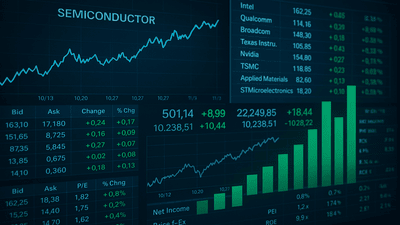
When global semiconductor M&A value hits a five‑year high, it is more than a headline about deal flow—it is a structural signal. Rising transaction values and a thick pipeline of strategic deals tell us that industry leaders believe scale, integration, and portfolio breadth are increasingly essential in a market shaped by AI, automotive electrification, industrial automation, and geopolitical tension. The current consolidation wave is not the first the sector has seen, but it is distinct in scope and motivation.
Why M&A has surged to a 5-year high
Semiconductor M&A activity tends to spike in phases where strategic uncertainty meets opportunity. The present surge reflects several overlapping drivers.
First, the AI infrastructure boom has created clear demand for high‑performance compute, networking silicon, and memory. Companies that lack critical technologies or scale see acquisition as a faster path to relevance than organic development.
Second, automotive and industrial markets are becoming more electronics‑centric. Domain controllers, power management, sensors, and connectivity modules are now strategic components for OEMs. Suppliers in these areas seek acquisitions to deepen portfolios and secure a broader design footprint across platforms.
Third, geopolitics and onshoring incentives have made control of supply chains a strategic priority. Firms use M&A to secure regional manufacturing footprints, acquire packaging and test capacity, or gain access to domestically located fabs that align with government programs.
Finally, financial conditions and balance‑sheet strength enable deal‑making. Many leading semiconductor firms emerged from recent cycles with strong cash positions, robust share prices, and high confidence in long‑term demand. That combination makes transformative deals more palatable to boards and shareholders.
Key themes in the current consolidation wave

Today’s M&A surge is not just about more deals; it is about certain recurring themes in what gets bought and why.
1. Analog, power, and automotive roll‑ups. A substantial portion of deal value is flowing into analog and power management segments serving automotive and industrial applications. Larger players are acquiring niche firms with specialized motor control, sensor, or high‑voltage portfolios to offer more complete solutions to OEMs. The goal is to become the “one‑stop” partner for critical vehicle and factory electronics.
2. AI compute and accelerator adjacencies. In high‑performance computing, large incumbents are acquiring smaller accelerator designers, interconnect specialists, or software‑hardware co‑design houses. These deals aim to accelerate entry into specific AI workloads or to plug gaps in networking, memory hierarchies, or packaging capabilities that are difficult to build from scratch quickly.
3. Specialty memory and packaging assets. HBM, advanced DRAM configurations, and packaging houses capable of 2.5D/3D integration have become prime targets. Buyers seek to internalize bottlenecks—owning or controlling memory and packaging assets that determine the performance and availability of AI systems.
4. Equipment and materials consolidation. Tool and materials vendors are also consolidating. Large equipment companies acquire niche players with specialized etch, deposition, inspection, or packaging tools to broaden their product families and lock in more process steps. Materials companies buy producers of critical chemicals, gases, or substrates to deepen control over semiconductor‑grade supply chains.
Strategic motives behind the big deals
Although each transaction has its own logic, several strategic motives recur across the consolidation wave.
Scale and operating leverage. Larger portfolios let firms spread R&D and overhead across more products and customers. In a world of rising development costs—especially for advanced nodes and complex analog—scale helps maintain margins and fund future innovation.
Portfolio completeness and cross‑selling. Acquirers aim to offer more of the system bill‑of‑materials: microcontrollers plus power devices, sensors plus connectivity, accelerators plus memory and packaging. This enables deeper integration with OEM roadmaps and multiplies design‑win opportunities.
Access to customers and design sockets. Many deals are driven by customer relationships as much as technology. Acquiring a company with entrenched design wins inside key automotive, industrial, or hyperscaler customers can be worth the premium, as those sockets are difficult to displace.
Regional manufacturing and geopolitical hedging. Deals that include fabs, packaging houses, or assembly plants located in favored regions help firms align with policy incentives and mitigate risks from export controls or trade disputes.
Subsector impacts: who feels consolidation most?
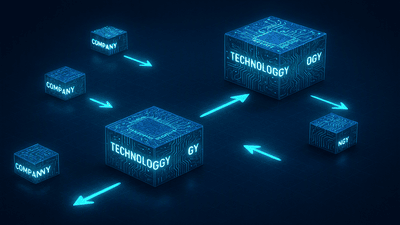
The acceleration of M&A affects different corners of the semiconductor ecosystem in distinct ways.
Analog and power. Here, consolidation often leads to larger, more diversified suppliers with broad application coverage in vehicles, industrial drives, energy systems, and consumer devices. Smaller specialist firms may find themselves acquired or competing against larger rivals with more resources and global sales reach.
Automotive semis. As general analog/power companies absorb specialized automotive players, OEMs may gain more unified platforms but face fewer independent vendors. This can simplify sourcing but create negotiation challenges if options narrow.
Logic and AI compute. Consolidation in AI logic typically revolves around integrating accelerators, interconnect, and memory subsystems. Customers benefit from more complete platforms but risk vendor lock‑in if one supplier controls too many critical elements.
Memory. M&A in memory often focuses on capacity rationalization and technology access rather than pure consolidation. Deals involving HBM‑aligned memory firms and packaging players can reshape who controls the most central bottlenecks in AI infrastructure.
Equipment and materials. Tool and materials consolidation may reduce the number of choices for fabs in certain segments. At the same time, larger suppliers can invest more in next‑generation tools and quality, which benefits advanced process development.
Implications for customers and OEMs
For OEMs and system integrators, a five‑year high in semiconductor M&A value is not just an abstract financial statistic—it translates directly into choices and constraints in sourcing and design.
Supplier concentration. As large players absorb smaller ones, OEMs may rely on fewer suppliers for critical functions. This can streamline integration and purchasing but increases exposure to individual vendor decisions, pricing strategies, and capacity constraints.
Platform benefits vs flexibility. Consolidated suppliers can offer integrated platforms that reduce engineering effort and accelerate time‑to‑market. However, platform lock‑in may reduce flexibility to mix‑and‑match best‑of‑breed components or to switch vendors quickly if performance or pricing disappoints.
Negotiation dynamics. Larger semiconductor suppliers often enjoy stronger bargaining positions. OEMs may need to build more strategic, long‑term relationships, including co‑development agreements and multi‑year supply contracts, rather than relying on short‑term, transactional sourcing.
Risk management. Consolidation underscores the importance of dual sourcing where feasible, especially for mission‑critical parts. OEMs should map where newly merged vendors represent single points of failure and develop contingency plans.
Implications for smaller chip firms and startups
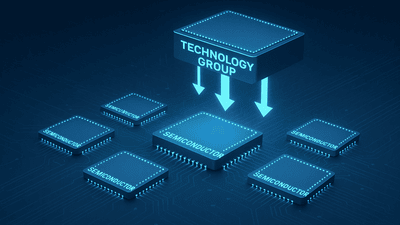
The consolidation wave creates both threats and opportunities for smaller semiconductor companies and startups.
Acquisition as exit and growth path. For some startups, being acquired by a larger player is a viable exit and a way to scale technology faster. Deals can provide capital, manufacturing capacity, and customer access that would be difficult to secure independently.
Competitive headwinds. For independent mid‑size firms, competing against larger, consolidated rivals with broader portfolios and global reach is challenging. Differentiation via unique IP, specialized application focus, or high‑touch customer support becomes essential.
Partnering opportunities. Smaller firms can position themselves as innovation engines and complementary specialists to bigger players, forming alliances that stop short of full acquisition. Joint development agreements and licensing strategies can monetize IP without giving up full control.
Funding environment. High headline M&A values can attract investor interest into semiconductor startups, but they also raise expectations. Early‑stage firms must demonstrate clear paths to either independent profitability or strategic relevance for potential acquirers.
Investor perspective: reading the consolidation signal
For investors, a five‑year high in global semi M&A value is a signal about how industry leaders view the future—and where value may accrue.
Confidence in long‑term demand. The willingness of acquirers to pay high prices for assets reflects belief in sustained semiconductor growth driven by AI, automotive, industrial digitization, and edge compute.
Valuation discipline. Not every high‑value deal is attractive from a shareholder perspective. Investors must examine whether transactions are accretive, whether synergies are realistic, and whether integration risks are manageable.
Portfolio positioning. The consolidation wave may favor companies that are either acquirers or high‑quality targets. Investors might tilt toward firms with strong balance sheets, strategic gaps they can fill via M&A, or unique capabilities that make them attractive acquisition candidates.
Regulatory and antitrust risk. Large deals can attract regulatory scrutiny, especially in markets where supply concentration could raise competition concerns. Investors should factor approval risk and potential divestiture requirements into their analysis.
Regulation and policy: watching consolidation’s boundaries
Governments and regulators increasingly view semiconductors through both competition and security lenses. The consolidation wave prompts new policy questions.
Market concentration and pricing. Regulators may worry that consolidation reduces competition and leads to higher prices or restricted access. They may impose conditions on large deals or require divestitures in sensitive segments.
National security and supply resilience. Deals that shift control of critical semiconductor assets across borders can trigger security reviews. Some jurisdictions may block acquisitions of strategic fabs, packaging houses, or key IP holders by foreign entities.
Industrial policy alignment. Where governments are investing public funds into semiconductor ecosystems, they will scrutinize whether M&A supports or undermines policy goals around local jobs, capacity, and technology transfer.
Transparency and governance. High‑value deals raise governance questions: how boards evaluate strategic fit, manage conflicts of interest, and communicate risk to stakeholders. Strong processes matter for both regulatory confidence and investor trust.
What could slow or reverse the consolidation wave?
Although M&A value has reached a five‑year high, the wave is not guaranteed to continue unchecked. Several factors could slow or reverse the trend.
Macroeconomic shifts. A significant downturn, tightening credit conditions, or market volatility could reduce risk appetite for large deals and make financing more expensive.
Integration fatigue. If high‑profile mergers run into severe integration problems—culture clashes, customer loss, or technology setbacks—boards may become more cautious about transformative transactions.
Regulatory pushback. Stronger antitrust enforcement or stricter national security reviews could lengthen approval timelines and discourage deals that materially increase concentration in critical segments.
Emerging disruptive entrants. New technology paradigms—novel architectures, open hardware movements, or platform shifts—could reduce the advantage of scale for some incumbents, restoring space for more fragmented competition.
Practical takeaways for different stakeholders
In a consolidation phase marked by record M&A values, each stakeholder group can take practical steps to position themselves effectively.
OEMs and system integrators: Map supplier concentration, identify critical dependencies arising from recent mergers, and strengthen strategic relationships with key vendors. Consider dual sourcing where feasible and engage earlier in co‑development discussions to influence post‑merger roadmaps.
Smaller semiconductor firms: Clarify whether the strategic goal is independence or a future acquisition. Build differentiated IP, deepen customer intimacy, and explore partnership models that increase strategic relevance without prematurely surrendering control.
Investors: Pay attention not only to headline deal values, but to the industrial logic of transactions. Focus on acquirers with disciplined track records and on targets whose capabilities are genuinely complementary rather than merely additive.
Policymakers and regulators: Balance competition concerns with the need for globally competitive national champions. Design review processes that are clear, predictable, and sensitive to both market health and security interests.
Conclusion: consolidation as a reshaping force
The fact that global semiconductor M&A value has reached a five‑year high underscores how central consolidation has become to shaping the industry’s future. As the semiconductor landscape grows more complex—spanning AI, automotive, industrial, consumer, and infrastructure—firms are using M&A to assemble capabilities that would be challenging to build organically in time to meet surging demand.
For customers, this wave offers both integrated solutions and new dependencies. For smaller players, it presents exit opportunities and competitive pressure. For investors and policymakers, it raises questions about long‑term industry structure, innovation incentives, and security. Navigating this environment requires clear strategic thinking: understanding not just who is buying whom, but why—and how those deals will influence technology roadmaps, supply dynamics, and competitive advantage over the decade ahead.
You May Like

Narrowing Spread Between NAND Spot and Contract Prices in 2026 – A Signal
By 2026, one of the most watched metrics in the NAND flash market has started to shift in a subtle but meaningful way: the spread between spot prices and long‑term contract prices is narrowing. For casual observers, this may look like just another incremental change in a notoriously volatile industry. For memory makers, module houses, device OEMs, and data center buyers, however, a tightening gap between spot and contract prices is a signal—a reflection of evolving supply–demand balance, risk perceptions, and strategic behavior on both sides of the market.

Price Divergence Trading Strategies Between NAND Flash and DRAM ETFs
NAND flash and DRAM sit at the core of AI storage and computing power. Both are memory, but they are not the same business. DRAM is main memory—fast, volatile, and central to high‑bandwidth workloads like AI training and inference. NAND is non‑volatile storage—slower than DRAM, but crucial to persistent data and large‑scale object storage. The cycles that drive their pricing and margins overlap, yet they often diverge. That divergence is where trading strategies between NAND and DRAM ETFs become interesting.

China’s HBM Localization Progress: The Catch-Up Pace of CXMT and XMC
China’s drive to localize advanced memory technologies has accelerated over the past several years. High-Bandwidth Memory (HBM) sits near the center of that strategy because it is integral to AI accelerators, high-performance computing (HPC) and other strategic compute platforms. Two domestic players—ChangXin Memory Technologies (CXMT) and XMC (Xianghui Memory, commonly referred to as XMC)—have become focal points in assessing how quickly China can close the gap with international incumbents on HBM die, stacking, and packaging.

Thermal Simulation Challenges and Solutions in 3DIC AI Chip Design
As AI workloads push chips to deliver ever higher compute density, designers are increasingly turning to three‑dimensional integration (3DIC) to stack dies vertically and pack more functionality into limited footprints. While 3DIC architectures unlock significant performance and bandwidth advantages, they also introduce complex thermal behaviors that are far harder to predict and manage than in traditional 2D layouts.

An Attempt at Compiling a Memory+Compute Fusion Thematic Index – A Dual-Track Framework
Most AI investors talk about “compute” as if it were the whole story: GPUs, accelerators, chips, cores. But every one of those cores needs somewhere to read from and write to. Memory and storage define how wide the data highway really is. In practice, AI performance is a fusion of compute and memory, not a solo act. So why do so many indices and ETFs separate them into different silos—one for semiconductors, one for memory, one for data centers—when the actual workloads keep blending them?

Surging Demand for Laser Drilling and Plasma Dicing Equipment in Advanced Packaging
Advanced packaging has become one of the semiconductor industry’s most important growth engines, and it is now pulling a surprising set of process tools into the spotlight. Among the most in-demand are laser drilling and plasma dicing equipment. These machines sit close to the heart of heterogeneous integration, fan-out packaging, wafer thinning, TSV formation, glass substrate processing, and other advanced flows where precision, yield, and throughput matter enormously. As packaging moves from a back-end afterthought to a strategic platform, the equipment used to shape, open, and separate materials has become just as important as the dies themselves.

D2D Interface Bandwidth and Latency Comparison in Chiplet Architectures
Chiplet architecture has turned the package into a real performance battleground. Once multiple dies are placed side by side or stacked within the same advanced package, the quality of the die-to-die, or D2D, interface becomes one of the most important determinants of system behavior. Bandwidth is no longer a nice-to-have metric, and latency is no longer a small implementation detail. Together, they shape whether a chiplet system feels nearly monolithic or frustratingly fragmented.

Stock Selection Logic and Alpha Validation of ESG-Themed Semi ETFs
Semiconductor themed ETFs are no longer just about growth and cycles. A growing subset now layers environmental, social, and governance (ESG) criteria on top of traditional sector exposure. These ESG semi ETFs promise two things at once: access to one of the market’s most powerful secular themes, and alignment with sustainability and governance standards. The pitch is appealing, but it raises two hard questions. First, how exactly are these stocks being selected? Second, does the ESG overlay help, hurt, or leave alpha unchanged?